Home / About
Reaching out since 1988
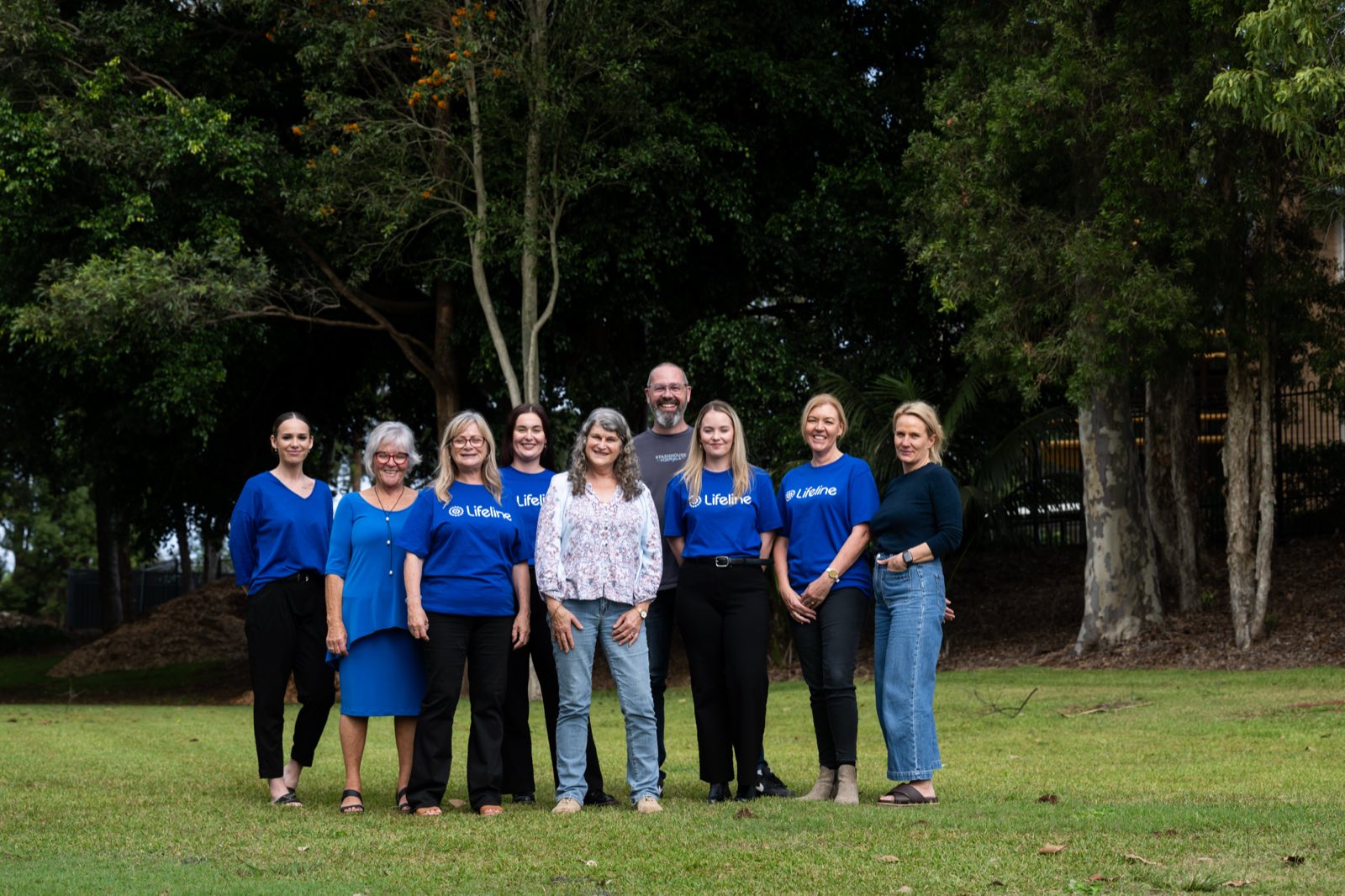
Lifeline Mid Coast is a community of volunteers, staff and supporters working toward a Mid Coast, and an Australia, free from suicide.
Our story
Established in 1988, Lifeline Mid Coast has spent more than three decades reaching out to people in crisis, whenever they need it and wherever they are. We're part of Lifeline Australia, the country's largest crisis-support and suicide-prevention service.
Through the national crisis line we connect with more than 26,000 callers each year. Alongside 13 11 14, we run local support groups, deliver community training, and operate six op-shops that keep it all running.
What we believe
We believe that listening comes first. That everyone deserves to be heard without judgement. And that no-one should have to face their toughest moments alone.
Why it matters
Behind every number is a person
These are Lifeline Australia’s national figures. They can be hard reading, and they are also why the line is answered around the clock.
People in regional and rural areas die by suicide at around twice the rate of those in the cities. That is the Mid Coast.
Australians have experienced suicidal thoughts or behaviours in their lifetime.
Australians who die by suicide, on average, every day.
Of those deaths are men, most often aged 40–59 and 85+.
Australians reach out to Lifeline for support each year.
A call comes in to Lifeline's crisis line, somewhere in the country.
If any of this is close to home, you can talk to someone now. If life is in danger, call Triple Zero (000).
Call 13 11 14Source: Lifeline Australia, Data & statistics (opens in a new tab), read 22 September 2026. We follow the Mindframe guidelines (opens in a new tab) for communicating safely about suicide.
Lifeline Mid Coast works on the Country of the Birpai people, the Gathang-speaking peoples and the Dunghutti Nation. We pay our respects to their Elders past, present and emerging, and to all Aboriginal and Torres Strait Islander peoples of the Mid Coast.
Lifeline is committed to providing a safe, culturally appropriate and inclusive service for all people, regardless of their ethnicity, faith, disability, sexuality or gender identity.